
You Know Nothing
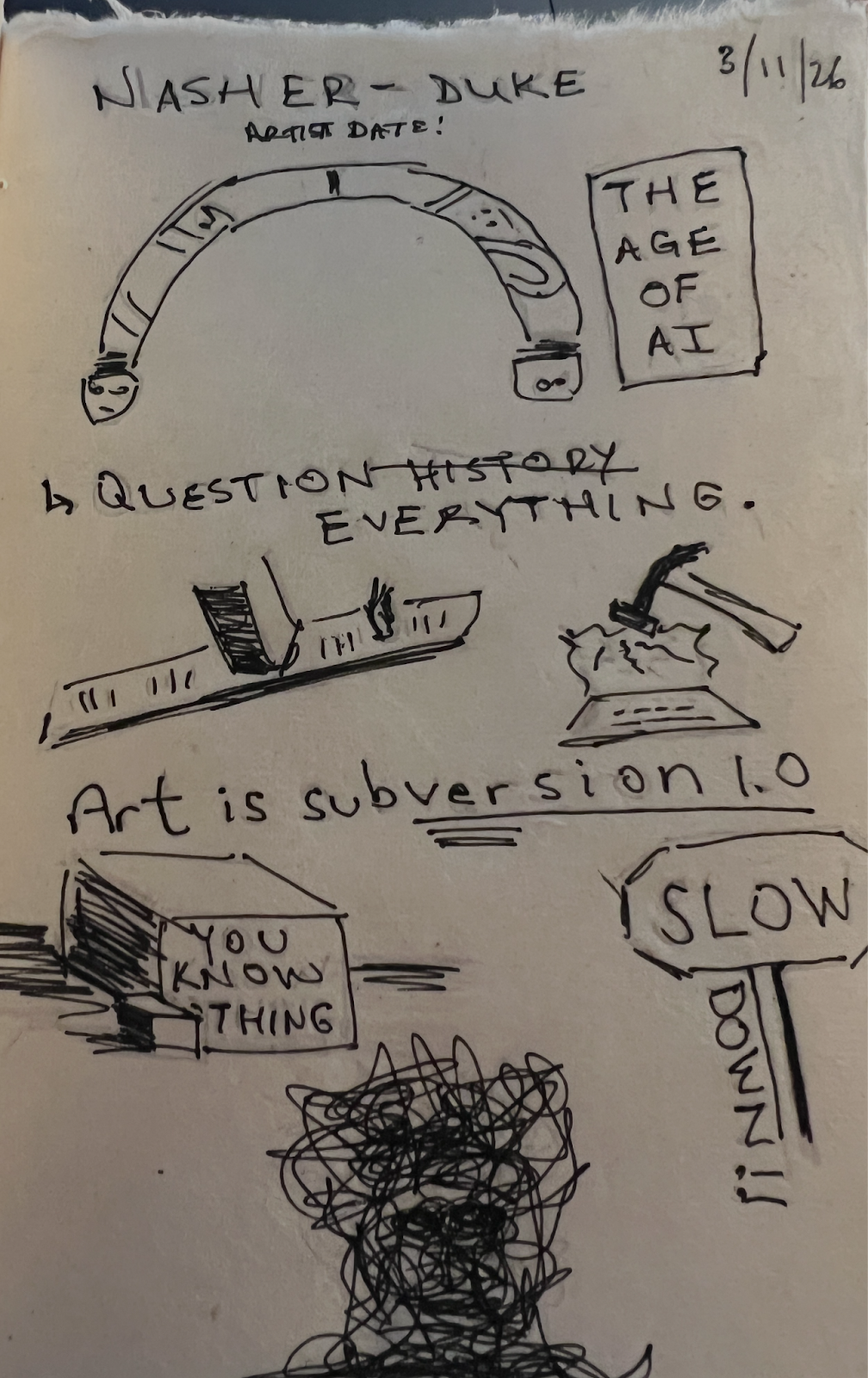
An ancient arch doesn’t know what AI is. It doesn’t need to.

I almost didn’t walk under it.
The arch stopped me dead in my tracks. I don’t know how long I stood there. Long enough that I noticed I hadn’t moved. I was having a moment.
The arch was old. Not old like a building you pass every day without seeing. Old in the way that makes your chest do something. Carved, heavy, permanent. The kind of object that has watched every disruption humans have ever survived and simply remained.
I’d come to the Nasher Museum at Duke on what I’ve started calling an artist date. From the mind of author Julia Cameron, it’s a solo trip to look at things without an agenda, without a deliverable, without my phone telling me what to think about next. I wasn’t expecting to spend five minutes standing in front of an arch thinking about the end of the world.
The thing about artifacts is they don’t care.
They existed before you. They’ll exist after you. The arch had already outlasted every empire, every plague, every technological revolution its creators could have imagined. It wasn’t preserved behind glass or explained by a placard designed to make it feel safe. It was just there, in the middle of a room, daring me to walk under it.
I stood in front of the Arch marveling at its age. I couldn’t move. Then, as I stepped through the opening, something shifted inside of me. I felt it in my chest. Then I checked my phone. Seriously. Force of habit.
Everything in the gallery had survived because it was physical, permanent, irreducible. You cannot download an ancient carved arch. You cannot generate a replacement. It exists in one place, as one thing, and it has weight.
Almost everything I create today exists on servers I don’t own, in formats that will be obsolete in a decade, on platforms that could vanish by Thursday. My work is ethereal in a way that no previous generation of creators has had to fully reckon with. That’s not a complaint. It’s just true. And standing in that museum, it felt important to say out loud.
History has a pattern, if you slow down enough to see it.
The Renaissance didn’t begin because someone invented a better sword. It began because artists and humanists started asking questions that institutions had declared closed. Art is subversion 1.0. The painting wasn’t just a painting. It was an argument. A crack in the wall.
The Industrial Revolution changed what people made and then changed what people were — their relationship to time, to labor, to each other. The information age did it again, faster. Each disruption followed a recognizable shape: something arrives, institutions resist, the curious find ways through, and eventually a new normal emerges that the previous generation couldn’t have imagined.
When Generative AI arrived, the pattern-matchers reached for their templates. This is the next industrial revolution. This is the printing press. This is electricity. History rhymes, we told ourselves.
Standing in that museum, surrounded by things that had survived every previous disruption, I started to wonder if the rhyme was right.
I don’t know if this time is different.
Not as a deflection but as a genuine question.
I’ve spent the last few years building AI tools, advising organizations on how to implement them, watching smart people get it right and watching smart people get it catastrophically wrong. I have opinions. I have frameworks. I have a whole consulting practice built around the premise that clarity beats confusion.
And I still don’t know.
Every previous disruption changed what humans did. The question I keep turning over is whether AI changes what humans are. Whether it changes what it means to think, to know, to make something.
The Renaissance artist was subverting authority. The industrial worker was renegotiating their relationship to labor. The information age knowledge worker was renegotiating their relationship to expertise.
What are we renegotiating now?
There was a sculpture in the center of one of the rooms. I stood in front of it, circled and actually sat down in front of it for minutes, staring into her soul, or trying to. The only thought I could muster was “you know nothing.” Not as an insult. As a relief.
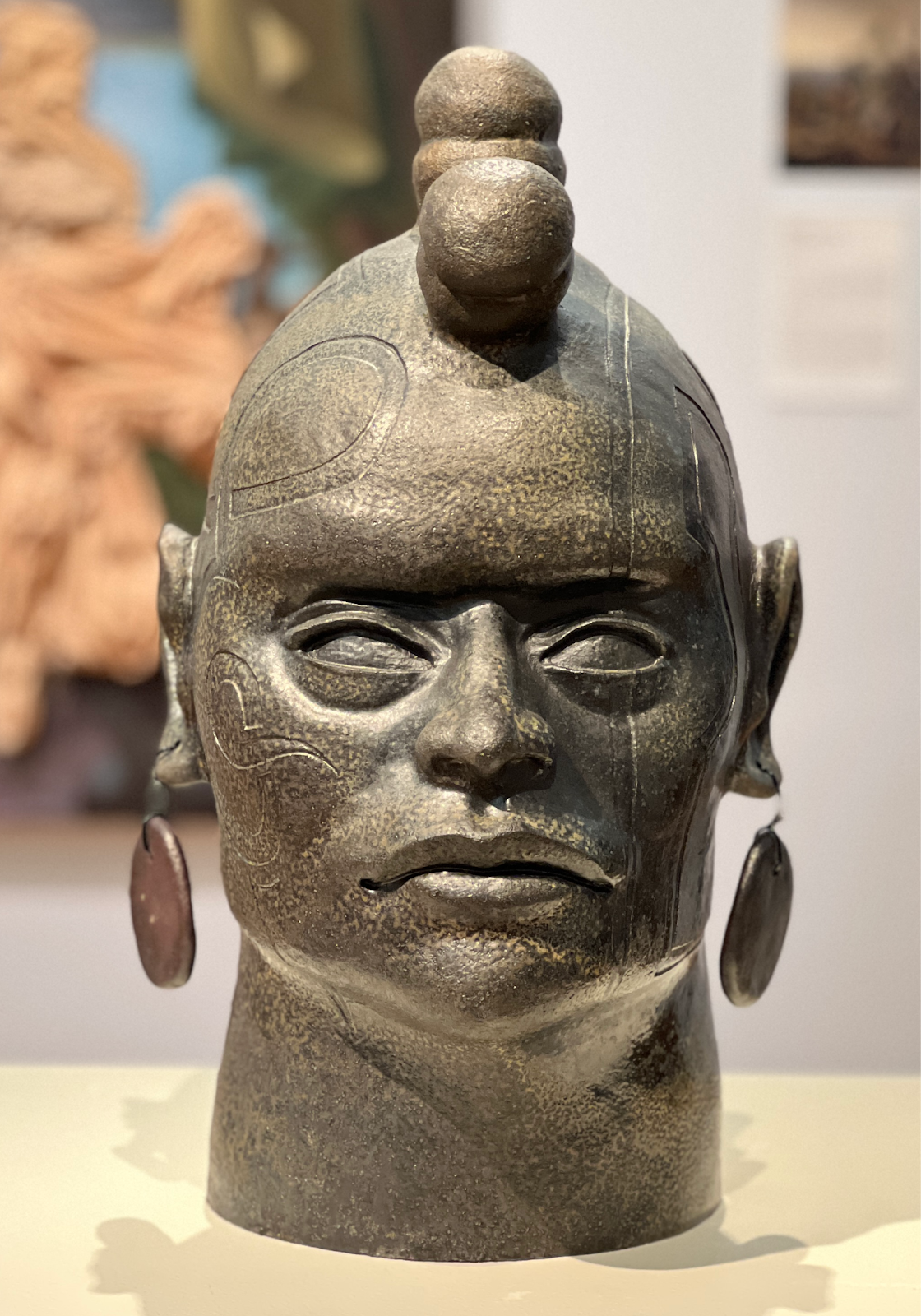
People living through massive change sometimes don’t know. They can’t see it from where they stand. Like us. Now. With AI. We think we can see what’s coming, but we can’t.
The artists of the early Renaissance weren’t thinking “we’re ending the Dark Ages.” The factory workers of the 1800s weren’t thinking “we’re creating the modern economy.” They were responding to what was in front of them, with the tools they had, as honestly as they could. When the first architects of the web were stitching together protocols and pages, they weren’t thinking, “we’re giving birth to the nervous system of modern life.” They were building what seemed useful, elegant, necessary. Only later did it become obvious that they had changed nearly everything.
We are not smarter than they were. We have more data and less wisdom, more speed and less stillness, more content and fewer things that will outlast us.
The arch doesn’t know what AI is. It doesn’t need to. It just stands there, having survived everything, daring us to slow down long enough to feel the weight of what we don’t understand.
I walked out of the Nasher into the afternoon light with no conclusions, no framework, no action items.
Just a question I’m going to be sitting with for a while:
In the age of infinite AI-generated everything, what are we actually making? And will any of it still be standing when someone who comes after us needs to feel the weight of it?
I don’t know. And I think that’s exactly the right answer.
That ancient arch was someone’s playbook. Carved in stone, surviving every disruption, still teaching anyone willing to slow down long enough to look.
I keep talking and writing about broken playbooks, but maybe the real question is whether we’re building anything worth handing down.
Photos and drawings by me visiting Nasher Museum, Duke University. March 11, 2026.
Love it! Thank you for writing down this small artifact